



Consultant in maritime history and creative lifestory
The sea and people of colour
The richness and complexity of maritime history can be best understood if studies take into account what are now called 'protected characteristics' : race, caste, religion or belief, age, disability, height, physical appearance, gender reassignment, pregnancy, marriage and civil partnership. People of colour in maritime can experience multiple intersecting disadvantages. And racism must be talked about when we talk about race, because of the way systems marginalise stigmatised workers.
Until recently women of colour were doubly excluded (or more) from working at sea. This is a good starting place if you want to learn more: 10 FAQs. Black women in maritime history.
Their place in the maritime world can be understood if we also look at port workers and passengers.
I'm particularly interested in the following sorts of women of colour in maritime. So I can give talks on:
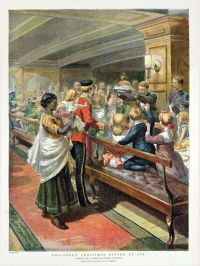
Ayah at children's party on ship. Painting by Godefroy Durand, 1889
- Women on the Empire Windrush, 1947: Caribbean seamstresses and white lady writers too.(see 'Women of Windrush: Britain's adventurous arrivals that history forgot,' New Statesman, 22 June 2018.
- The few 18C women of colour who cross-dressed on sailing ships as cabin boys, including 'William Brown' from Grenada
- Ayahs as women of colour travellers, 1850-1930.
- 20C sex workers in ports. They serviced visiting seamen and in doing so gave men entrée into the hidden local culture beyond tourism
- Gash Jennies in 20C Hong Kong. See 'A warm stroke from shore to ship: naval homages to Hong Kong's female side-parties', Port Towns and Urban Cultures, 14 April 2020. porttowns.port.ac.uk/hong-kongs-female-side-parties
You can get my 11-page bibliography of people of colour seafarers by emailing me: .
My recent talks, which you can see online.
AYAHS. The Lascar's posh aunties: Indian ayahs working as passengers of the Raj: 1800-1939. Black History Month talk, in Maritime UK's Ethnicity in Maritime Network, October 2021. Now available as streamed PowerPoint talk at bit.ly/AyahsMUK
AYAHS AND LASCARS. Anything like Lascars? Race, gender and Ayahs (Asian nannies) as working passengers, 1850-1950,'Blaydes Maritime History Seminar, Hull. November 2021 and now available as PowerPoint at www.youtube.com/watch?v=sxBcDJx73z0
Filmed talks
- "Anything like Lascars? Race, Gender and Ayahs (Asian Nannies) as Working Passengers 1850-1950," Blaydes Maritime Centre webinar, University of Hull, 2021. https://www.youtube.com/watch?v=sxBcDJx73z0&t=18s
- "The Lascars Posh aunties?" Maritime UK's Black History Month webinar, Oct 2021, https://www.youtube.com/watch?v=E9XpXKokhmo
Read This
Articles
- Stanley, J. 2024. 'From Hudson to Niger: Langston Hughes’, Marine Quarterly, Summer, pp 89-93, www.themarinequarterly.com/back-issues/issue-58-summer-2025.
- Stanley, J. 2023. 'Seawomen of colour: Where were they and why not?' 29 Sept 2023, https://genderedseas.blogspot.com/2023/09/seawomen-of-colour-where-were-they-and.html
- Stanley, J. 2022. 'Jamaican ship's cook: her poison mystery 1764' 14 Oct 2022, https://genderedseas.blogspot.com/2022/10/jamaican-ships-cook-mystery-of-her.html
- Stanley, J. 2022. 'Mother commanding thousands at sea; Zheng Yi Sao' 23 July 2022 https://genderedseas.blogspot.com/2022/07/mother-commanding-thousands-at-sea.html
- Stanley, J. 2022. '"Indolent" Madras girl orphans voyaging to Australia 1842, 19 March 2022, https://genderedseas.blogspot.com/2022/03/indolent-madras-girl-orphans-voyaging.html
- Stanley, J. 2022. “Invisible Hands: ayahs' voyages,” History Today, January, 72 (10) www.historytoday.com/archive/history-matters/invisible-hands
- Stanley, J. 2021. 'Facing fatal Infection at Xmas: the ayah on the threatened SS Nubia,' 23 Dec 2021, https://genderedseas.blogspot.com/2021/12/facing-fatal-infection-at-xmas-ayah-on.html
- Stanley, J. 2021. 'Portuguese Ayahs: Early explorers of baby-minding sort,' 14 Nov 2021, https://genderedseas.blogspot.com/2021/11/portuguese-ayahs-early-explorers-of.html
- Stanley, J. 2021. 'First ayah rescued from shipwreck, 1832', 9 Aug 2021, https://genderedseas.blogspot.com/2021/08/first-ayah-rescued-from-shipwreck-1832.html
- Stanley, J. 2021. 'Pioneering Indian ayahs afloat (South Asian Heritage Month 2021)', 11 July 2021, https://genderedseas.blogspot.com/2021/07/pioneering-south-asian-women-voyagers.html
- Stanley, J. 2021. 'Counting BAME women into piracy: 9 FAQs,' 5 March 2021, https://genderedseas.blogspot.com/2021/03/counting-bame-women-into-piracy-9-faqs.html
- Stanley, J. 2019. 'Jamaican woman behind the Navy List', 5 Nov 2019, https://genderedseas.blogspot.com/2019/11/
- Stanley, J. 2019. '10 FAQs. Black women in maritime history,' 31 Oct 2019, https://genderedseas.blogspot.com/2019/10/10-faqs-black-women-in-maritime-history.html
- Stanley, J. 2019. 'Chinese women working with UK ships in 20C,' 10 July 2019, https://genderedseas.blogspot.com/2019/07/chinese-women-working-with-uk-ships-in.html
- Stanley, J. 2019. 'Women in the geography of Liverpool's Malay seamen,' 13 Jan 2019, https://genderedseas.blogspot.com/2019/01/women-in-geography-of-liverpools-malay.html
- Stanley J. 2020. The voyage of the Empire Windrush - A different perspective, Historycalroots, 25. July 2020
- Stanley, J. 2019. Veterans victimized (The 1919 race riots in ports), Nautilus Telegraph, March, pp44-45, .
- Stanley J. 2019: Review: 'Ruhleben 1914-1918: African diaspora and Arab civilians interned in Germany,' International Journal of Maritime History, Vol 31, no 2, pp 414-422.
- Stanley J. 2018. 'Homeward Bound', in Marine Quarterly, Autumn, pp86-90.
- Stanley J. 2018. Review. 'Black Salt' exhibition, Merseyside Maritime Museum, International Journal of Maritime History, Autumn, Vol 30, issue 4, pp747-759.
- Stanley J. 2018. 'Homeward Bound', in Marine Quarterly, Autumn, pp86-90.
- Stanley J. 2018. 'Questing for Cuba Cornwallis' (Nelson's Jamaican nurse0, in Trafalgar Chronicle, Autumn.
- Stanley J. 2013. 'Searching for Histories of Black Women's Service across the Seas in the Second World War', History Workshop Online, January 14.
- Stanley J. 2012. 'Ayahs Who Travelled: Indian nannies voyaging to Britain in the nineteenth century', Black and Asian Studies Association Newsletter, January, pp5-8.
- Stanley J. 2000. 'Black women on British ships', Black and Asian Studies Association Newsletter, no. 28, Sept, pp10-13.
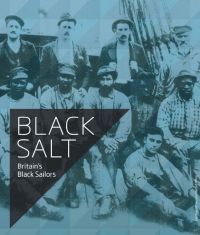 Black Salt exhibition, Merseyside Maritime Museum
Items in my blog on the gendered seas
- Stanley, J. 2024. ‘Caribbean maritime courage: quarter-master Lionel Licorish on the Vestris, 1928.’ 6 Oct 2024. genderedseas.blogspot.com/2024/10/caribbean-maritime-courage-quarter.html
- Stanley, J. 2024. ‘Empire Windrush's voyage from the Caribbean: 1948. White expat women among would-be residents,’ 22 June 2024. genderedseas.blogspot.com/2024/06/empire-winrdushs-voyage-from-caribbean.html
- Stanley J. 2019. Black seafarers in WW1. Event 24 Jan 2019. https://genderedseas.blogspot.com/2018/11/black-seafarers-in-ww1-event-24-jan-2019.html
- Stanley J. 2019.The black cook, the cross-dressed wife, and the ship's hot kitchen 1852. https://genderedseas.blogspot.com/2019/10/the-black-cook-cross-dressed-wife-and.html
- Stanley J. 2019. 10 FAQs. Black women in maritime history. https://genderedseas.blogspot.com/2019/10/10-faqs-black-women-in-maritime-history.html
- Stanley J. 2018. Ed. Guest blog by John D Ellis. When "Jack Tar" met "Tommy Atkins": Black Men Serving as Both Sailors and Soldiers during the Napoleonic Wars. https://genderedseas.blogspot.com/2018/07/when-jack-tar-met-tommy-atkins-black.html
- Stanley J. 2018. Adultery, miscegenation and lies in a naval family: black sailor John Webb, 1785. https://genderedseas.blogspot.com/2018/12/adultery-miscegenation-and-lies-in.html
- Stanley J. 2018. Black seafarers in WW1. Event 24 Jan 2019. https://genderedseas.blogspot.com/2018/11/black-seafarers-in-ww1-event-24-jan-2019.html
- Stanley J. 2017. Black seafarers celebrated in Black History Month, Merseyside Maritime Museum. https://genderedseas.blogspot.com/2017/09/black-seafarers-celebrated-in-black.html
- Stanley J. 2017. Jamaican woman behind the Navy List. https://genderedseas.blogspot.com/2019/11/jamaican-woman-behind-navy-list.html
- Stanley J. 2016. Nominations for top Black and Minority Ethnic women seafarers https://genderedseas.blogspot.com/2016/10/nominations-for-top-black-and-minority.html
- Stanley J. 2010. Women on sailing ships 1650-1850 / Black sailors. https://genderedseas.blogspot.com/2010/07/women-on-sailing-ships-1650-1850-black.html
- Stanley J. 2017. Race and the Sea conference, Liverpool Sept 2017. https://genderedseas.blogspot.com/2017/06/race-and-sea-conference-liverpool-sept.html
- Stanley J. 2016. Belinda Bennett, first black woman cruisehip captain https://genderedseas.blogspot.com/2016/03/belinda-barrett-first-black-woman.html
- Stanley J. 2013. Sex, race, drugs - and some liberation - in Limehouse's 1920s sailortown. https://genderedseas.blogspot.com/2013/12/sex-race-drugs-and-some-liberation-in.html
- Stanley J. 2013. Black servicewomen sailing to UK in wartime. https://genderedseas.blogspot.com/2013/01/black-servicewomen-sailing-to-uk-in.html
- Stanley J. 2012. Black woman becomes deputy head of US Navy. https://genderedseas.blogspot.com/2012/08/black-woman-becomes-deputy-head-of-us.html
- Stanley J. 2009. Asian seamen. https://genderedseas.blogspot.com/2009/08/asian-seamen.html
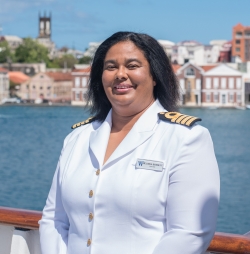
Belinda Bennett, Cruise ship captain
NB. There are many more blog items. The blog began in 2008. It is digitally searchable by topic e.g 'ayah'. It's backed up at British Library's UK Web Archive. www.webarchive.org.uk/